SERVING OUR COMMUNITY
NEWS
&
UPDATES

Welcoming our Covid-19 Vaccination Centre to the community
The Pacific Health Plus (PHP) team is proud to continue its effort in meeting needs and changing lives by delivering a COVID-19 vaccine service for our community at Freedom Church Porirua with the help of Porirua Union Community Health Service (PUCHS).
Pacific Health Plus Covid Vaccine Clinic at Freedom Church Porirua
Talofa lava | Kia ora | Aloha mai e | Ia orana | Taloha ni Malo ni | Fakaalofa lahi atu | ‘Alii | Ni sa bula vinaka | Kia orana Halo olaketa | Mauri | Warm Pacific greetings | Malo e lelei
The Pacific Health Plus (PHP) team is proud to continue its effort in meeting needs and changing lives by delivering a COVID-19 vaccine service for our community at Freedom Church Porirua with the help of Porirua Union Community Health Service (PUCHS). A very warm Pacific welcome greeted guests at the Community Covid Vaccine Centre opening and blessing this morning. Thank you to Barbara Edmonds MP and Pacific Director Tagaloa Junior Ulu at Capital & Coast District Health Board (CCDHB) for joining us in celebrating these collaborative efforts, to Pastor Teremoana Tauira for the warm welcomes and blessings, and to Molly Fiso Advisory Board Member Pacific Health Plus on behalf of Fiso John Fiso, Chair of Pacific Health Plus. Faʻafetai
As the only Pacific owned and governed medical practice in the Wellington region, it is important that initiatives like the Covid Vaccine Clinic are responsive to Pacific needs and are driven by Pasefika to reflect meaningful engagement for Pasefika in being integral to solutions and not just end users of healthcare.


What you need to know about Breast and Bowel Screening
Important information to know about breast screening and bowel screening, and what impact COVID-19 has on these services. See the information below, sourced from Time to Screen.
Important information to know about breast screening and bowel screening, and what impact COVID-19 has on these services. See the information below, sourced from Time to Screen.
Let us know if you’ve had a COVID-19 or Flu vaccination before your appointment.
HAVING A MAMMOGRAM
INFORMATION SOURCE: timetoscreen.nz/breast-screening/having-a-mammogram
Eligible women aged between 45 and 69 can get a free mammogram (a kind of breast check) every 2 years. This is part of a programme run by BreastScreen Aotearoa.
If you:
are aged 45 to 69
have no symptoms of breast cancer
have not had a mammogram from another provider within the last 12 months
are not currently pregnant or breastfeeding
are eligible for public health services in New Zealand (check on the Ministry of Health website)
then you can get a free mammogram every 2 years – sign up now.
You can choose whether or not to join BreastScreen Aotearoa and have regular mammograms. To help you decide, here is some information on the benefits and harms.
If you have had breast cancer before, you can sign up 5 years after your breast cancer was diagnosed. Before that time, your doctor or specialist will make sure you have regular check ups.
If you do have breast symptoms you’re worried about, see your doctor – don’t wait for your next mammogram appointment!
Preparing for your mammogram
Go to Preparing for your mammogram for advice on what to expect – including if you need change your appointment, what happens at your appointment, and tips to make things easier.
After your mammogram
If anything needs checking after your mammogram, we’ll invite you to come back for further assessment. This is also free. You can find out more at After your mammogram.
For most women, no cancer will be found, and we’ll invite you to come for another mammogram in 2 years.
If cancer is found then you will be offered treatment through your public hospital. Treatment is free. Find out more at Treatment.
Not eligible?
There are other publicly funded options available if you are not eligible for the free 2-yearly mammograms. Ask your doctor next time you see them.
COVID-19 and Breast Screening
Let us know if you’ve had a COVID-19 or Flu vaccination before your appointment.
BreastScreen Aotearoa services are continuing to operate, although your appointment could be slightly different as staff will be taking additional precautions, including keeping their distance as much as possible.
If you are sick or have been in contact with a COVID-19 case: It is important that you stay home and don’t attend your appointment. Please do give us a call and let us know that you can’t make it and we can re-book you in for another time. If you do have cold or flu symptoms, then you should also call your doctor or Healthline on 0800 358 5453.
BOWEL SCREENING
INFORMATION SOURCE: timetoscreen.nz/bowel-screening
The National Bowel Screening Programme is free for people aged 60 to 74 years. It aims to save lives by finding bowel cancer at an early stage when it can often be successfully treated.

How does the Covid-19 Vaccine Work?
As the world experiences the roll out COVID-19 vaccine, the World Health Organisation delve into how vaccines actually work. What are the different types of vaccine? How do they trigger and train the immune system, and what is the role of herd immunity?
As the world experiences the roll out COVID-19 vaccine, the World Health Organisation delve into how vaccines actually work. What are the different types of vaccine? How do they trigger and train the immune system, and what is the role of herd immunity?
Watch the following videos below to find out how the vaccine actually works.
Dr Emma Espiner and Dr Api Talemaitoga answer your COVID-19 vaccine questions.Dr Emma Espiner and Dr Api Talemaitoga answer your COVID-19 vaccine questions. For more information, visit www.covid19.govt.nz/vaccines
Posted by Unite against COVID-19 on Monday, May 10, 2021

COVID-19 Vaccination Information Evening
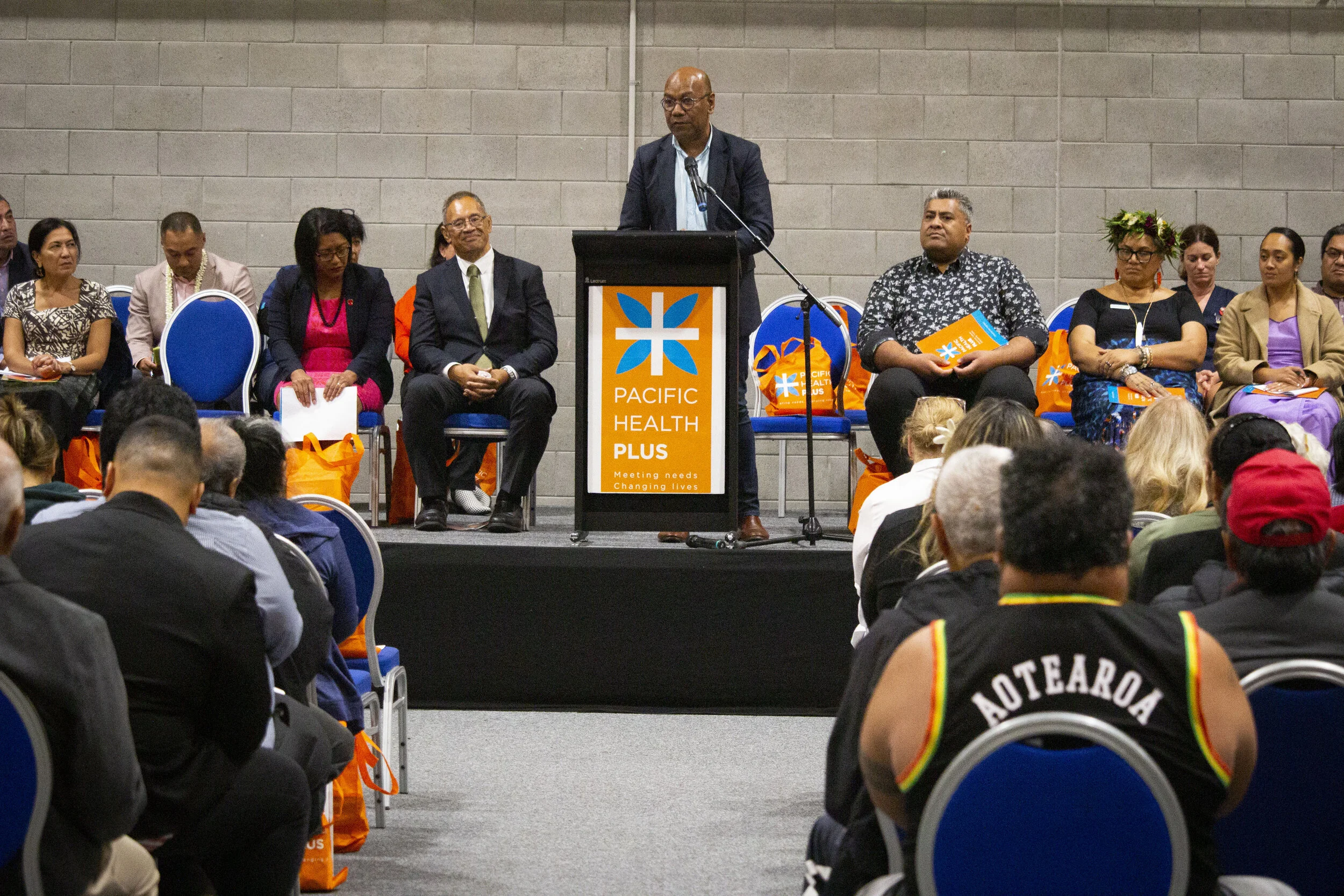
Pacific Health Plus in conjunction with Ministry of Pacific Peoples and Ministry of Health hosted a community fono last night for the Porirua region. The COVID-19 Vaccination Information Evening brought together the community to inform and prepare for the roll outs of vaccinations to our wider community.
Bringing together our community to inform and prepare for the COVID-19 vaccination rollout
Pacific Health Plus in conjunction with Ministry of Pacific Peoples and Ministry of Health hosted a community fono last night for the Porirua region. The COVID-19 Vaccination Information Evening brought together the community to inform and prepare for the roll outs of vaccinations to our wider community.
It was fantastic to see a full house at this event with Dr Apisalome Talemaitoga, Dr Debbie Ryan, Mana MP Barbara Edmonds, Ministries of Health and Pacific Peoples, and our very own Pacific Health Plus Chairman Fiso John Fiso and the PHP team.


Thank you to Pacific Leaders Group representatives Siaosi Anamani for welcoming the community and MCing the evening, and Zechariah Reuelu for the closing encouragements. Thank you also to Pastor Teremoana Tauira for the opening and closing prayer, and to the students from Whitby Collegiate for being great helpers.
Chairman of PHP, Fiso John Fiso, opened the evening by stating the purpose of the fono and introduced speakers MP for Mana Barbara Edmonds, Dr Api, Dr Ryan, DHB representative Tagaloa Junior Ulu, and MOH and MPP teams.


Chairman of Pacific Health Plus, Fiso John Fiso




Key messages from the evening were:
The Pfizer vaccine is FREE and available to everyone aged 16 and over. It will help to protect New Zealand from COVID-19.
For the vaccine to be effective you must receive 2 DOSES.
There will be a specific location in Porirua where all COVID-19 vaccines will be administered. Decisions on this location will be made in coming weeks.
The vaccine is estimated to be available to the community from May/June.
When asked “is the vaccine safe?” Dr Api broke it down to 3 key points:
Clinical trials with over 40,000 people
Millions of doses already given overseas
NZ Med Safe approved
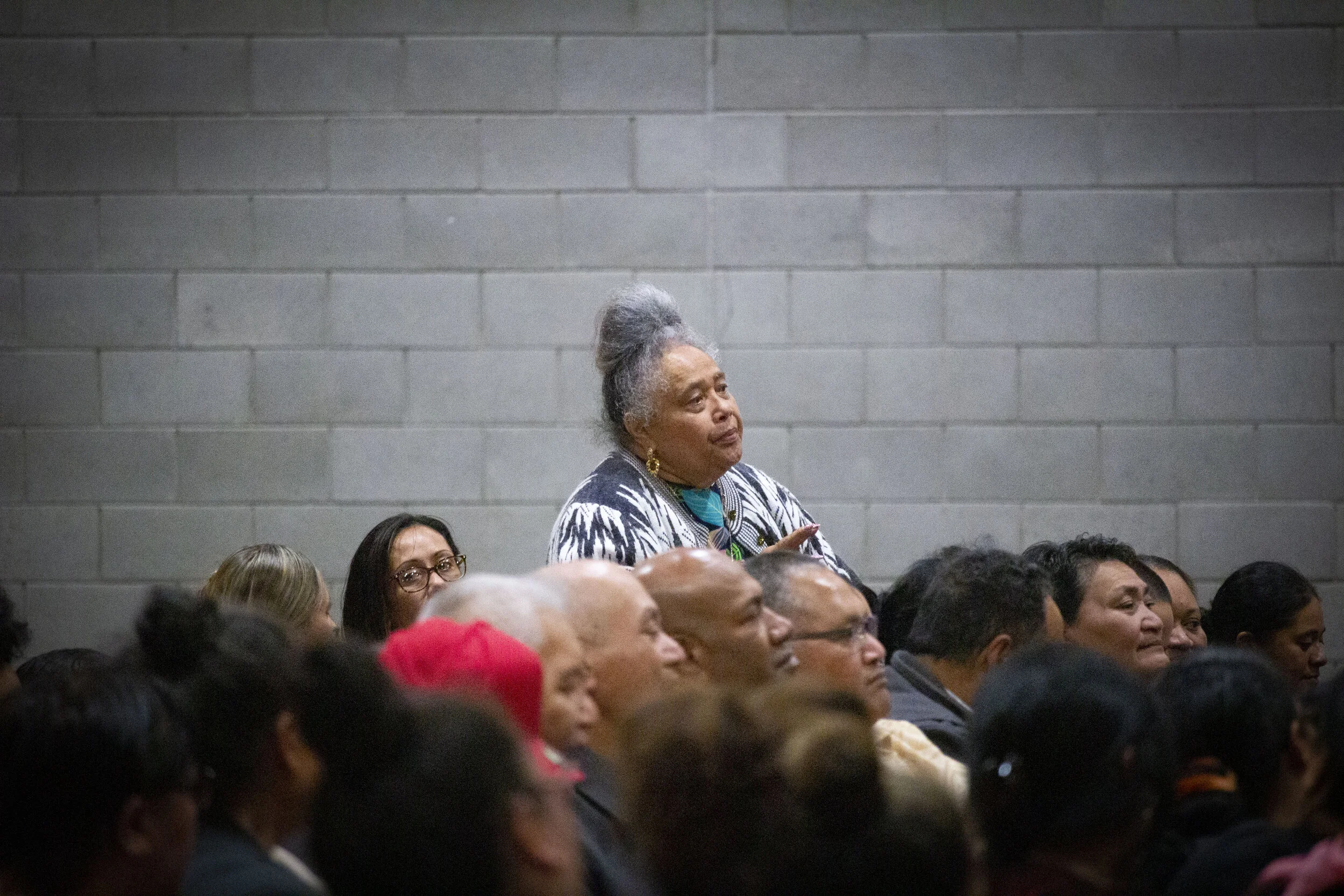
A Q&A session provided our Porirua Pacific community with an opportunity to ask Dr Api, Dr Ryan and Ministry of Health representatives hard-hitting questions like, “what happens if you can’t get to the vaccination location?”, “is it safe if you take other medications for health conditions like diabetes?”, “will the vaccine protect you from other COVID-19 strains?”, and “why can’t the vaccination roll out be any faster?”.



Answers to these questions and more information can be found on the following websites. More information will be advertised as the campaign rolls out to our wider community.


Mobile Treatment Health Unit
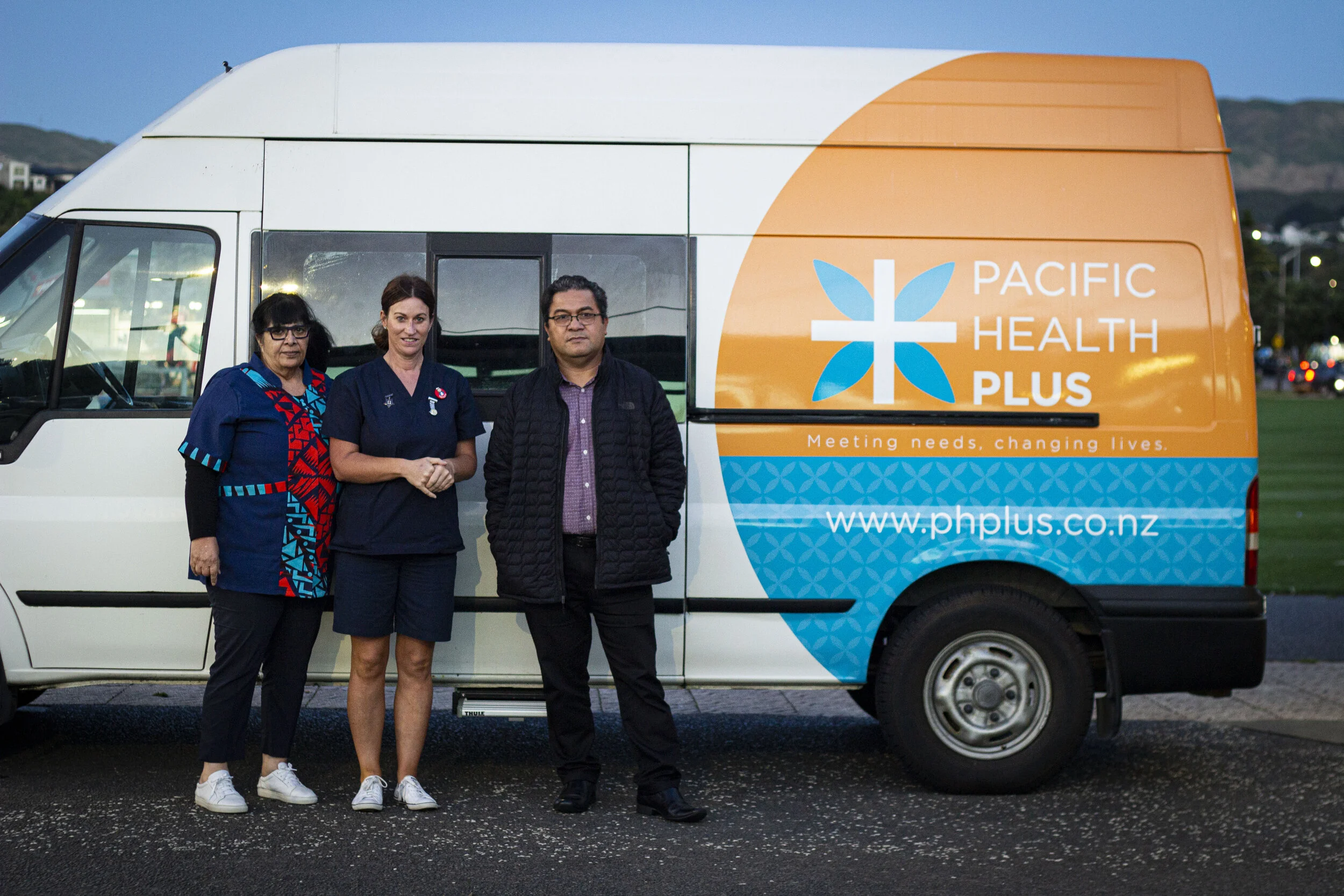
Pacific Health Plus has set up a mobile health unit so that we can provide care to patients who, for whatever reason cannot make it to the clinic for treatment. This means patients will be more likely to seek out treatment, and conditions can be treated at earlier stages in their development.
Pacific Health Plus has set up a mobile health unit so that we can provide care to patients who, for whatever reason cannot make it to the clinic for treatment. This means patients will be more likely to seek out treatment, and conditions can be treated at earlier stages in their development.


Changing the course for Pasifika
"The new health report needs a much stronger focus on early investment at the front line and for prevention, just as we invest in roading projects and infrastructure for the long term." - John Fiso ONZM, Chairman, Pacific Health Plus
Simpson health review must change the course for Pasifika
With the release of the Government’s Health and Disability System Review, we have the opportunity to navigate a new and a more aspirational course.
The report is comprehensive, and clearly identifies what Pacific people have known for a long time: that the health system does not deliver what we need, and is fundamentally inequitable.
It is no secret that 380,000 of our team of five million have disproportionately worse health outcomes than everyone else. Pacific people live five years less than the national average; 300 Pacific children under the age of 5 are hospitalised annually; 60 per cent of rheumatic fever cases are among the Pacific population; Pacific people have higher preventable death rates, respiratory disease, heart disease and diabetes.
In short, Pacific people are at the bottom of the pile when it comes to pretty much all the indicators, and I think we can say, without argument, that the health system is failing this fast-growing section of the New Zealand population.

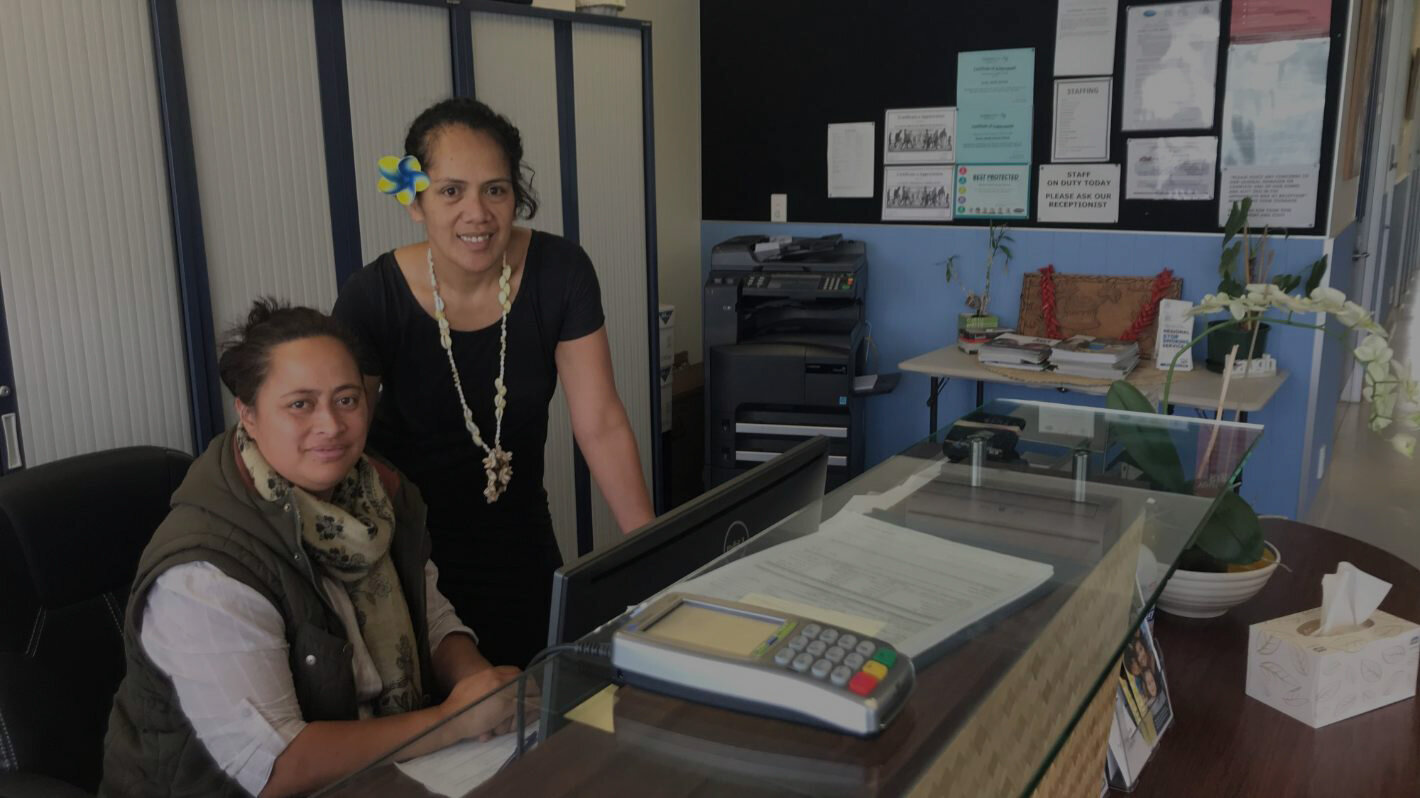
Isabella Mapusua and Kitiona Tauira at Pacific Health Plus. Sixty percent of PHP's patients are categorised as high-needs.
Inevitably, some remedies have been signalled in the report. For example, to move to greater devolvement of ownership, management and delivery of health services by the communities they are there to serve.
But while this has been succinctly stated for Māori in the report, there is no such equivalency indicated for the Pasifika population.
What is missing is a tailored response made on the basis of need, irrespective of ethnicity. By this I mean an assessment of where the greatest needs lie, and then a bespoke action plan to change that.
The approach, as it is described for Māori in the report, must have Pacific leadership and representation at all levels of health – governance, management, and service delivery, informed by the communities the system is there to help.
In short, to truly solve our biggest health problem we need a Pacific health authority for exactly the same reasons you would have one for Māori. With the same ultimate goal to change downward spiralling health statistics.

John Fiso, chairman of Pacific Health Plus: "The new health report needs a much stronger focus on early investment at the front line and for prevention, just as we invest in roading projects and infrastructure for the long term."
In Porirua, which has the highest Pacific population outside South Auckland, despite 10 years of "investment" and intervention, life expectancy for Pacific people is eight years lower than for others, and this gap has not narrowed over that period.
This must change. At our health practice in Cannons Creek, eastern Porirua, 60 per cent of our patients are high-needs, which means they have serious underlying conditions.
When we initially took over the practice, we had very little access to resources, which meant we had to search for innovative partners and programmes, particularly in the areas of heart disease, diabetes and related diseases. We quickly realised we also had to move into education and preventative programmes to stop the spiral.
In March, during the Covid pandemic, we had to source our own PPE gear offshore and hunt for flu jabs from other practices to make up the shortfall. This came as a huge shock because, knowing the significant underlying health vulnerabilities, combined with high-density housing, low or no incomes and limited access to healthcare, it would be carnage in the community if the virus caught on.
It was hard to fathom that the health system’s funding model prioritised a "mainstream" practice across the road ahead of a high-needs Pacific practice funded at a lower level. That is unacceptable.
Over time we have started dealing directly with the Pacific directorate of the Ministry of Health, the Pacific division of the Capital & Coast DHB, and a Whānau Ora provider of Pacific Futures, and we get a much more targeted, efficient and less bureaucratic response. This means resources get to the front line quickly.
The new health report needs a much stronger focus on early investment at the front line and for prevention, just as we invest in roading projects and infrastructure for the long term. We also need integrated health services to include education, mental health, workforce development and housing. Complex solutions are required for a multi-faceted problem.
And Pacific people must be involved at all levels. Without this partnership, we risk the new system being deaf and blind to the needs of Pasifika, and the opportunity for real change is lost.
There is a new Pacific generation coming through the ranks who are young, talented, educated, aspirational and confronting. They must be empowered to insist on an equal place in all parts of New Zealand. If we can do this, then Pasifika can make a rightful contribution to the social, cultural and economic wellbeing of the country.
The health and disability review has identified that it is time to navigate a new course in health and, as the original explorers in the Pacific, we are ready to set sail and lead the way.
Poor efforts to wipe out Rheumatic Fever
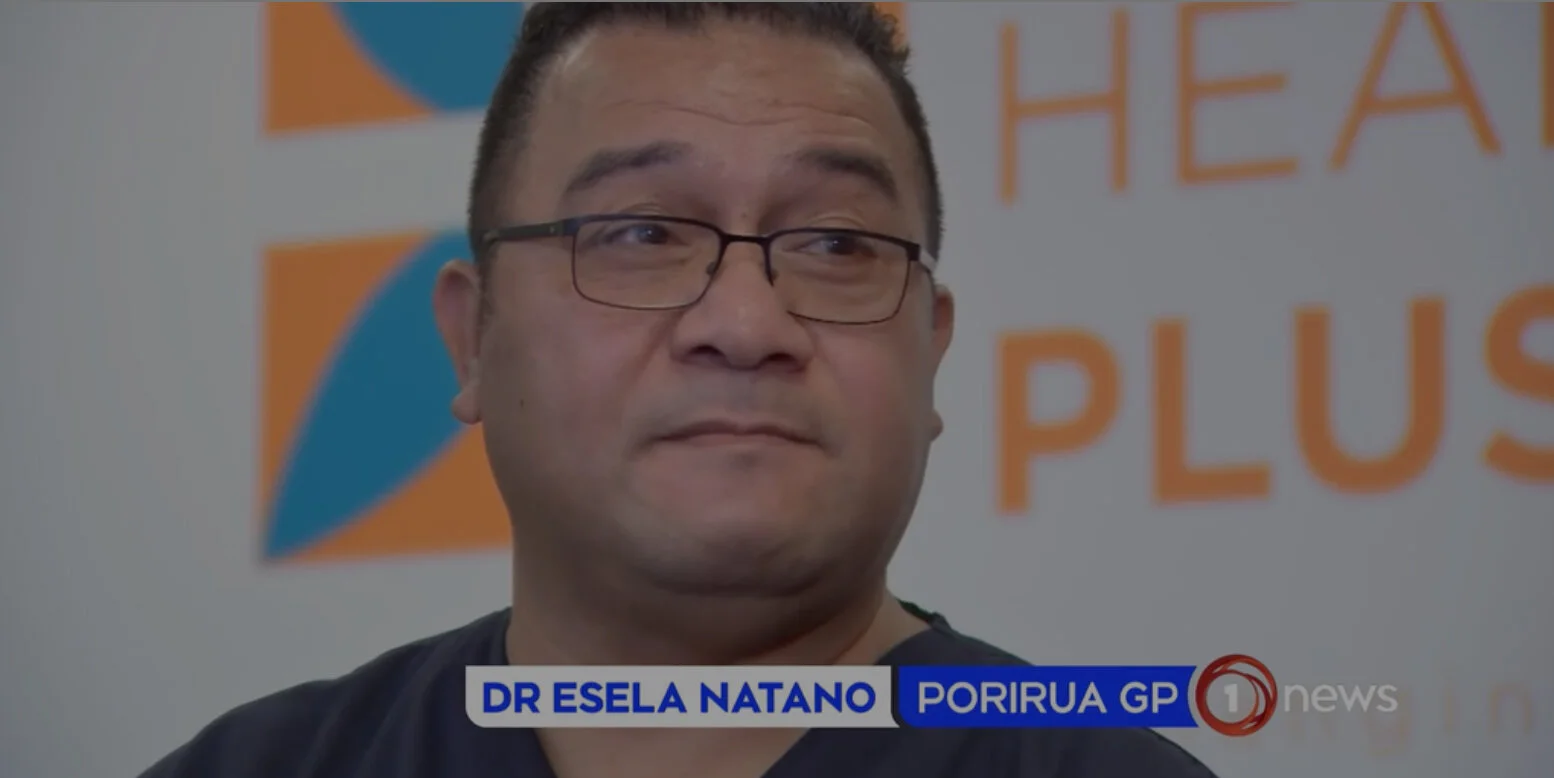
Pacific Health Plus GP Dr Natano and Director Lee Pearce comment on the Government’s poor efforts to wipe out rheumatic fever after several regions have reported a spike in cases this year despite ongoing work to improve living standards.
Pacific Health Plus GP Dr Natano and Director Lee Pearce comment on the Government’s poor efforts to wipe out rheumatic fever after several regions have reported a spike in cases this year despite ongoing work to improve living standards.
Read the article full here:


Introducing Telemedicine
PHP is the first Health Practice in the area to bring this innovation to PHP Covid response. This will aid in keeping our precious workers and patients safe.
PHP is the first health practice in the area to bring telemedicine to it's COVID-19 response. This will aid in keeping our precious workers and patients safe.
Thank you to Ministry of Health for supporting high needs Pacific communities respond to Covid-19.

Facilities outside the front of PHP
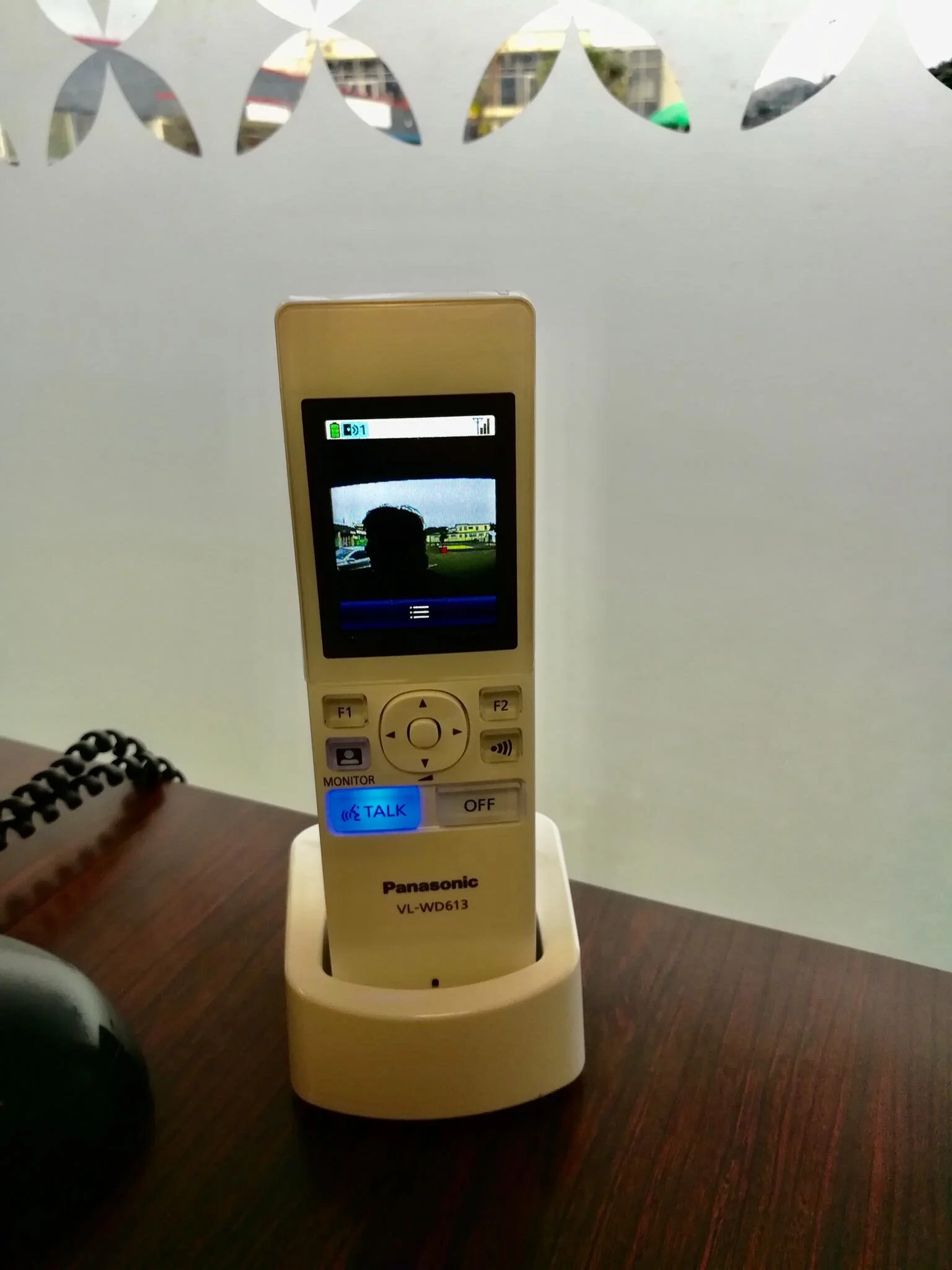

Display screen inside PHP

When Art and Health Colide
With an overload of information about COVID-19 being disseminated, it is important Pacific and other vulnerable communities feel they are being spoken to directly.
Article Source: Ministry for Pacific Peoples www.mpp.govt.nz/news-and-stories/when-art-and-health-collide

(Picture caption: Artwork from Michel Tuffery's Handle with Care series.)
With an overload of information about COVID-19 being disseminated, it is important Pacific and other vulnerable communities feel they are being spoken to directly.
This is why Pacific Health Plus (PHP) is using artwork by Wellington-based Pacific artist Michel Tuffery to help inform communities about best practice hygiene for keeping safe from the spread of COVID-19.
The Owner and Board Chair at the Porirua-based Pacific primary healthcare service John Fiso says of the 2234 people enrolled at PHP, 60 percent are high needs patients with chronic conditions.
“Therefore, it is essential we inform our patients of good hygiene practices to keep the vulnerable safe and healthy.
“We must go over and above to protect our Pacific communities.”
The PHP team approached Michel, having worked with him before, to develop some images the organisation could use for sharing information which spoke directly to Pacific communities.
Of Samoan, Rarotongan and Ma’ohi Tahitian heritage, Michel is not only a talented artist, but also a passionate educator who openly shares his kauapapa and knowledge to empower youth through residencies and workshops for school-aged children in New Zealand and abroad.
Michel’s Handle with Care series, take inspiration from postal services, using Pacific and New Zealand postage stamps redesigned with individuals wearing face masks and rubber gloves, stamped over with a fragile sticker.
The artist explains his series shows how fragile the Pacific community is, and that we really need to look after our elderly, and those with health conditions.
“It is hard to know how you can help from isolation but as an artist, creating art to spread important messages, is how I can do my bit for my communities in this tough time,” Michel adds.
The images have been printed as posters and put up around the local community in the pharmacies and supermarkets as well as at neighbouring health clinics and on Facebook and websites.
Michel’s prior work with PHP included assisting with youth engagement and therapy classes as well as decorating a mural outside PHP premises to brighten the otherwise severe surroundings of the building in east Porirua.
Pacific Health Plus is still open, doing flu vaccinations, child immunisations and seeing patients using a variety of methods such as staggered appointments, video/phone consultations.
Visit the Unite Against COVID-19 website for all you need to know about COVID-19 in New Zealand.
COVID-19 Community Support
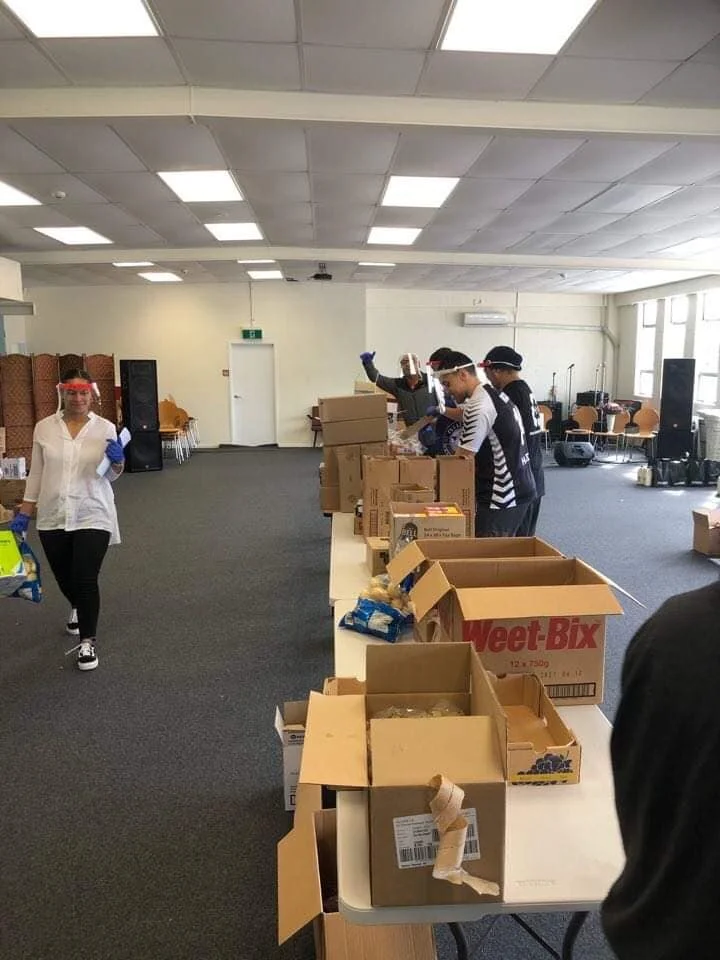
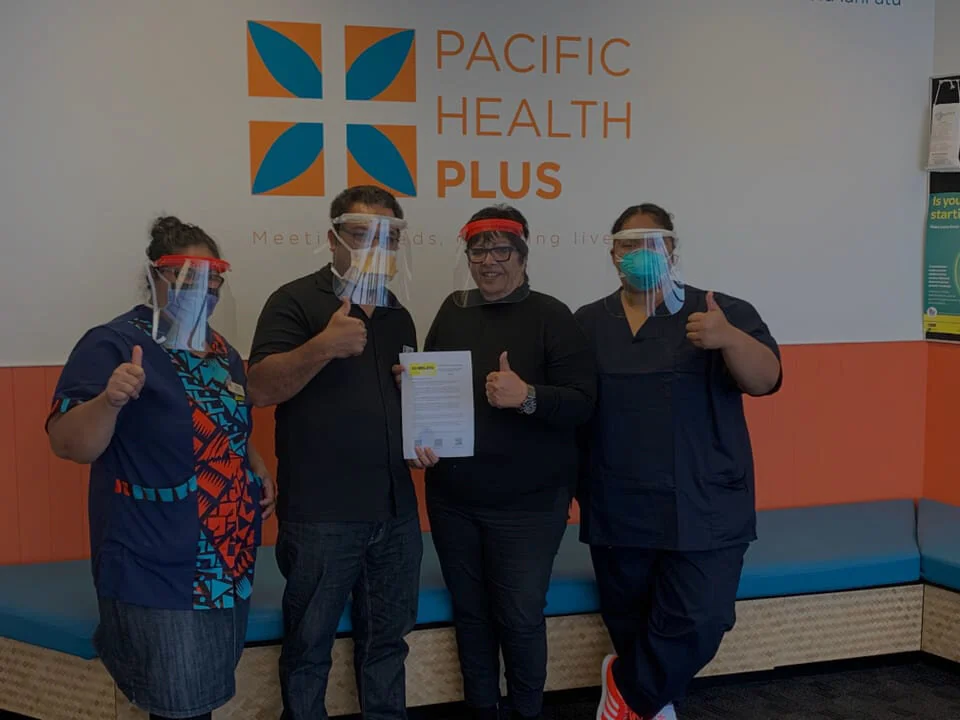
Thank you to Pacific Health Plus staff and the supporting essential workers from across the Fiso Group who have been providing sustenance by delivering food and care packages to our Pacific Health Plus families who require assistance.
Thank you to Pacific Health Plus staff and the supporting essential workers from across the Fiso Group who have been providing sustenance by delivering food and care packages to our Pacific Health Plus families who require assistance. These essential workers make this all possible. Already many of the community thank you for your service and dedication.
Read more:
https://pacificmedianetwork.com/articles/emotional-experience-delivering-care-packages-in-porirua
https://www.rnz.co.nz/news/pacific/415051/welfare-packs-given-to-people-in-vulnerable-nz-suburb